Professional · Frontend Engineer · 2024–2026
One climate-action platform for five audiences
Individuals, business buyers, customers, Sales, and Marketing each needed their own path through Karbon-X. Over four releases, I built the frontend for those paths, working with designers and back-end developers.
Visit karbon-x.com (opens in a new tab)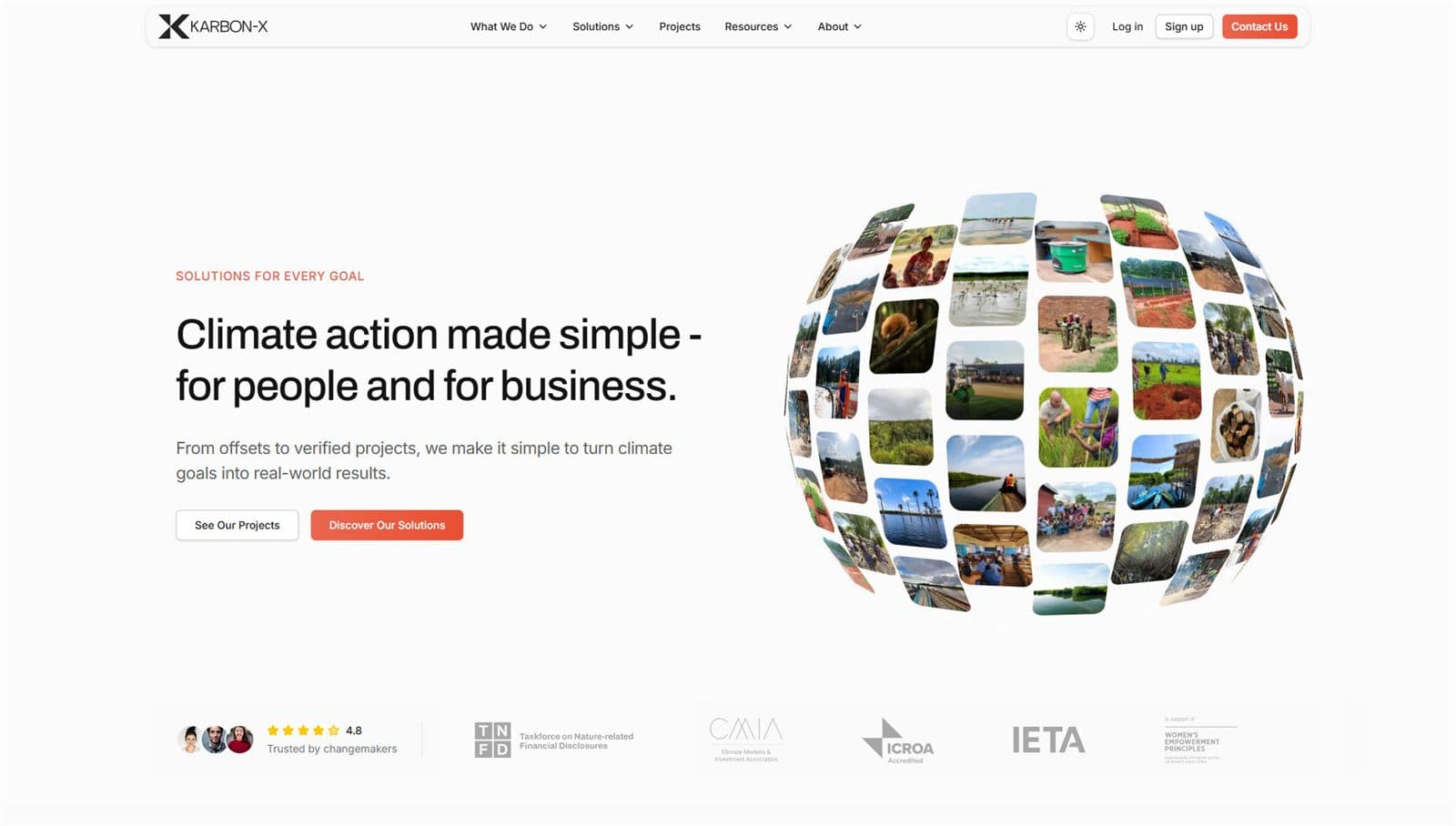
At a glance
- Audiences
- 5
- Releases
- 4
- Launched in October
- 2024
- Partnered with
- Designers, back-end developers, Product, Marketing, and sustainability specialists
- Scope
- 5 audiences across public, authenticated, and internal tools
- Key technologies
- Next.js, React, TypeScript, Stripe
- The challenge
- Give five audiences clear paths through one platform, release after release.
- My contribution
- Built the frontend for public journeys, the B2B calculator, payments, portals, the Marketing admin, the quiz, and the redesign.
- Outcome
- Three releases live from October 2024 to July 2025. The 2026 redesign remains on staging.
Problem
Each audience came with a different question. Each release had to add a new path without breaking the ones already live.
Individuals
Understand their footprint in plain language, and choose a plan.
Business buyers
Estimate their emissions and buy carbon credits.
Customers
Save calculations, pay, and find their orders later.
Sales
See accounts, clients, and orders.
Marketing
Publish articles and news without a developer each time.
Contribution
I owned
- The frontend of the original platform, as its main frontend engineer from the start, and of the 2026 redesign, where I was the sole frontend engineer until May 2026.
- The business calculator flow, designed from the requirements, and its 2026 redesign.
- Checkout and Stripe payment, including failure and retry.
- The Marketing admin for Blog, News, and Press Releases.
- The climate-persona quiz: the idea, research, design, and build.
- The proposal for customer case studies, and their page structure.
I partnered with
Not mine
Solution
The platform opened to one audience at a time. The chapters follow that order.
One platform, four releases
October 2024
Original platform and business calculator
Individuals and business buyers
January 2025
Marketing admin
Marketing
July 2025
Customer and Sales portal
Customers and Sales
2026
2026 redesign
All five audiences
From estimate to purchase on one site
We launched in October 2024, in time for the start of the Edmonton Oilers season. Businesses could estimate their emissions and buy carbon credits on the same site. I built the frontend from the designers' layouts, and designed the calculator flow from the requirements.
What shipped together
- Home, About, Projects, and Contact
- Business page with the emissions calculator
- Carbon credit purchase with Stripe
- A short Individuals page
The calculator's rules, and how it changed later, are in the B2B Emissions Calculator case study.
Publishing without a developer
Marketing needed to publish articles and news without asking a developer each time. I built an admin where they write an article once. The public page, its search result, and its social preview all read those same fields.
Step 1 of 3
Marketing editor
Create, preview, publish, unpublish, or delete.
Step 2 of 3
Content API
Blog, News, and Press Release endpoints, built by the back-end team.
Step 3 of 3
Public article
The page, plus its title, description, and social preview.
As of October 30, 2026, karbon-x.com lists 122 items published since the admin launched in January 2025: 80 blog posts, 40 press releases, and 2 news items.
Admin
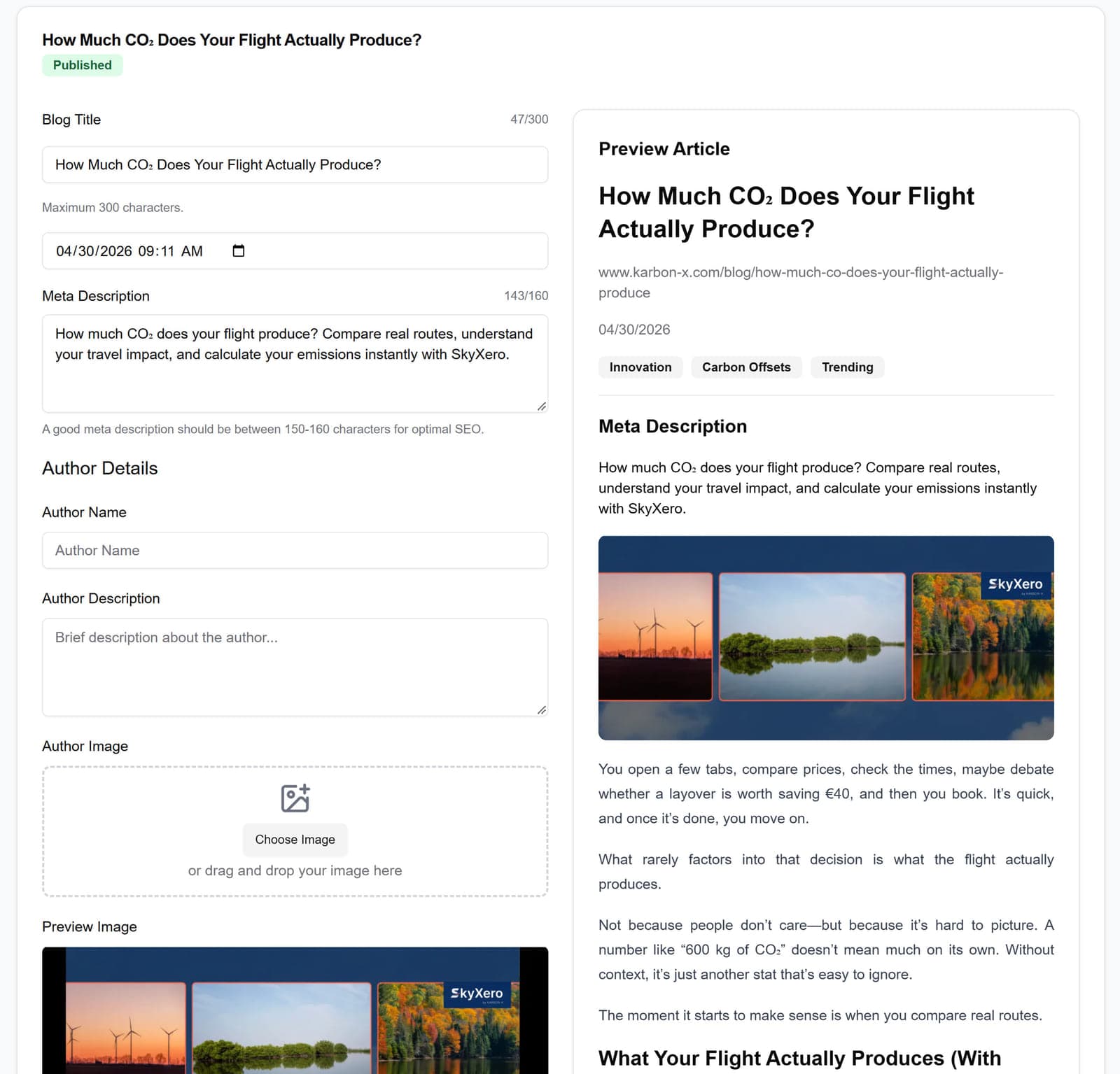
The live preview is built from the same fields as the public page. The author and description are placeholders. Public site
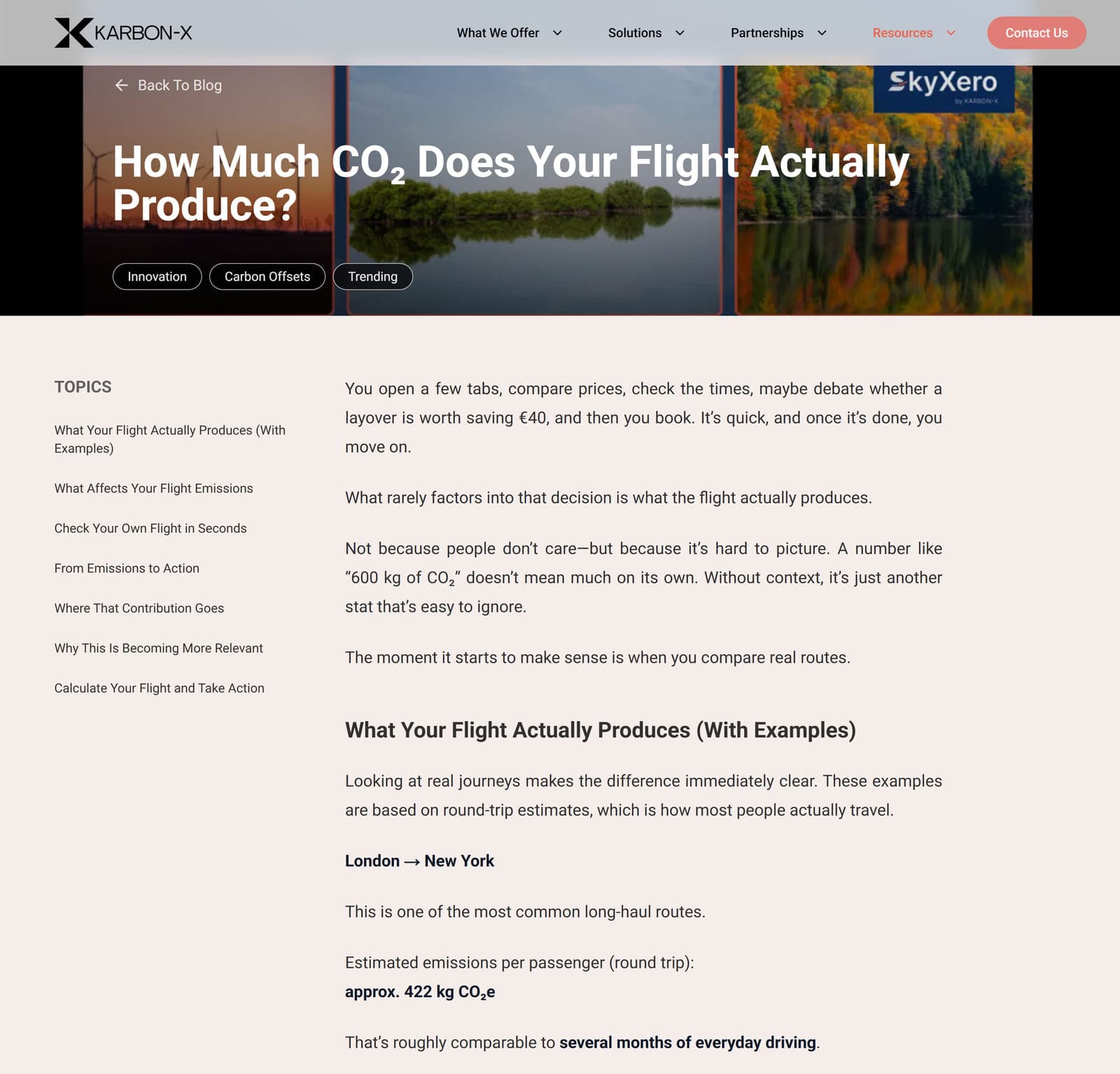
The same article on the public site. The title, labels, hero, and opening match the editor.
Clear pathways from cart to confirmation
From July 2025, customers could sign in, pay for a saved calculation or a plan, and find the order later. Payment is where a customer most needs to know what is happening, so every stage has a name on the button, and a failed payment returns to checkout with a reason.
Step 1 of 6
Calculation or plan
A saved calculation or a plan.
Step 2 of 6
Cart
Review items, or an empty cart with a way back.
Step 3 of 6
Checkout
Confirm the order. A failed load can be retried.
Step 4 of 6
Payment
Stripe card payment. The button names the current stage.
Step 5 of 6
Purchase result
Confirmation while the order is finalized.
Step 6 of 6
Order
The order in the list and in its detail view.
Payment states
idleThe button shows the amount to pay.
validatingThe form is checked before anything is submitted.
processingStripe confirms the payment.
creating_invoiceThe invoice is created after the payment succeeds.
redirectingThe customer is sent to the purchase result.
successPayment successful. The cart is cleared.
errorA failed or invalid payment returns to checkout with a reason, and the customer can try again.
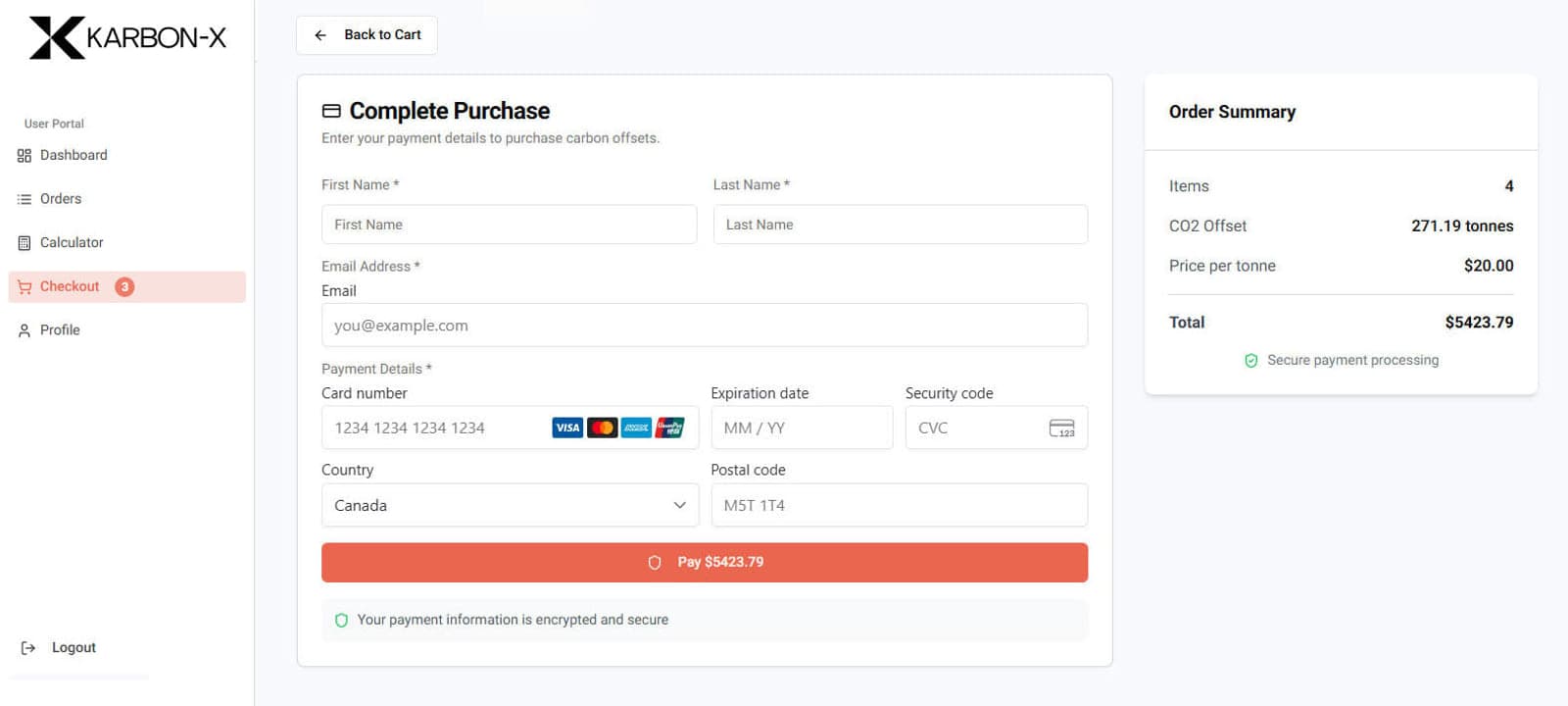
Sales uses the same list and detail views for accounts, clients, orders, and profiles.
A short quiz instead of a long scroll
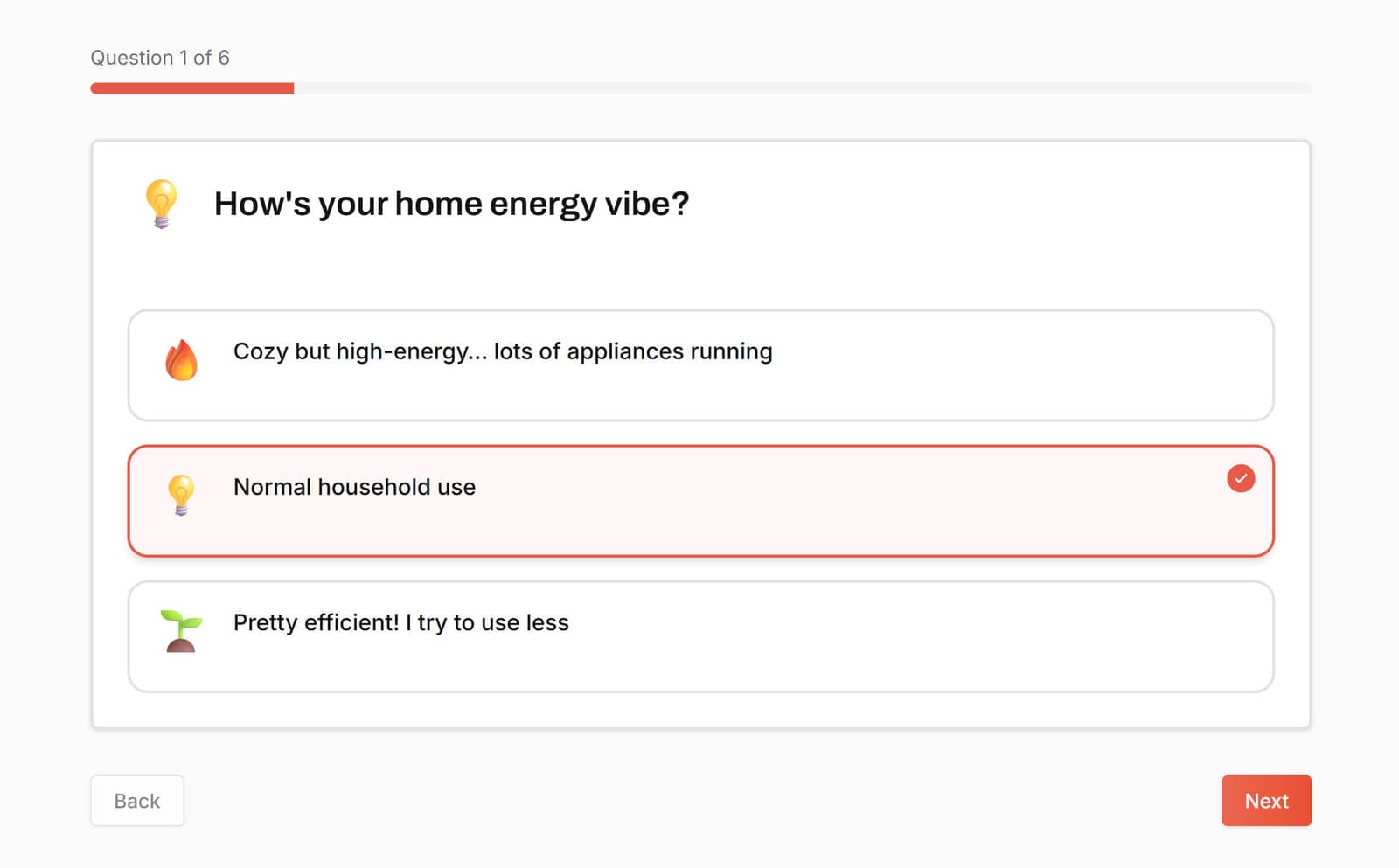
The Individuals page mixed a lot of loosely structured education with the plans, which sat far down the page with little lead-in. I proposed a quiz that turns some of that education into a game and ends with a persona and a matching plan. I researched, designed, and built it.
Step 1 of 4
Six questions
One answer each, saved as it is chosen.
Step 2 of 4
Rule-based scoring
Fixed rules turn the answers into a result.
Step 3 of 4
Persona
One of ten, explained in plain language.
Step 4 of 4
Plan
Small, medium, or large, linked to pricing.
Already decided
The Individuals page keeps a direct link to pricing, so the quiz never stands in the way.
Decisions
Rules, not a model
The same answers always give the same persona, so the result is easy to explain and to test.
Progress in the URL and local storage
A refresh, the back button, or a shared link returns to the same question.
Result email
Sending the result to an inbox is built and tested against a mocked endpoint.
Trust a visitor can check
Carbon offsetting is an often mistrusted category, so a claim alone convinces no one. I proposed customer case studies that let a visitor check the work, then designed and built their page with our designers and Marketing.
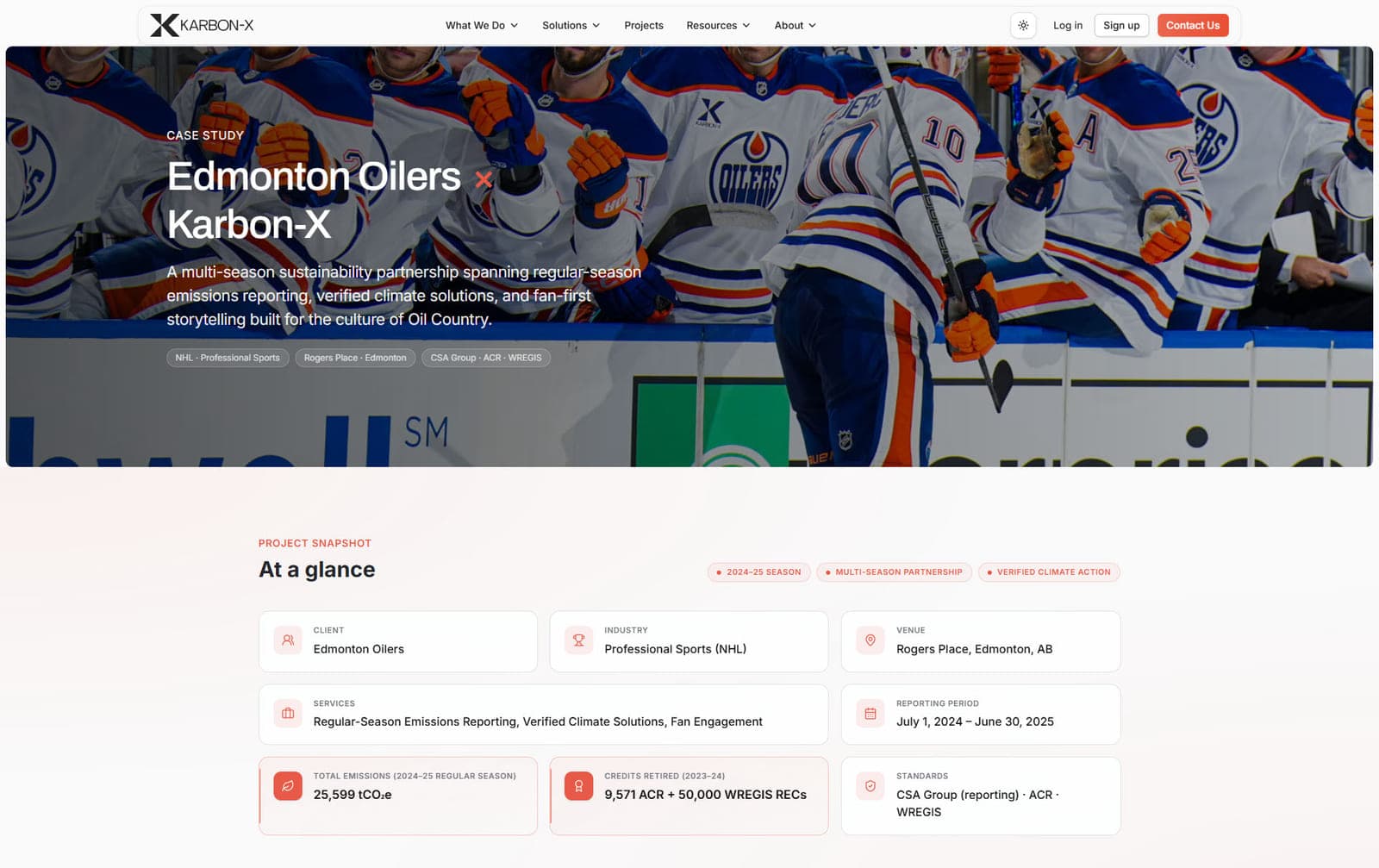
Page structure
At a glance
Partnership, season, and headline results in one scan.
Overview
The challenge, then reporting, offsets, and fan engagement.
Emissions breakdown
Scope 1, 2, and 3 totals, each with its sources.
Offsets
Retired credits and certificates, named by registry and project.
Campaign
A four-phase rollout, then how it worked on game day.
Impact
Results at a glance, then the UN Sustainable Development Goals.
Redesigning without breaking what worked
As the sole frontend engineer on the 2026 redesign until May 2026, I kept the flows that worked and rebuilt the foundations under them.
Foundations
Design tokens
Type and color come from one theme instead of values set page by page.
Server and Client Components
Pages render on the server. Only the interactive parts ship JavaScript to the browser.
One API client
Requests go through one shared client instead of separate fetch calls.
State beside its feature
New stores live next to the feature that uses them. Older ones move only when touched.
Original platform
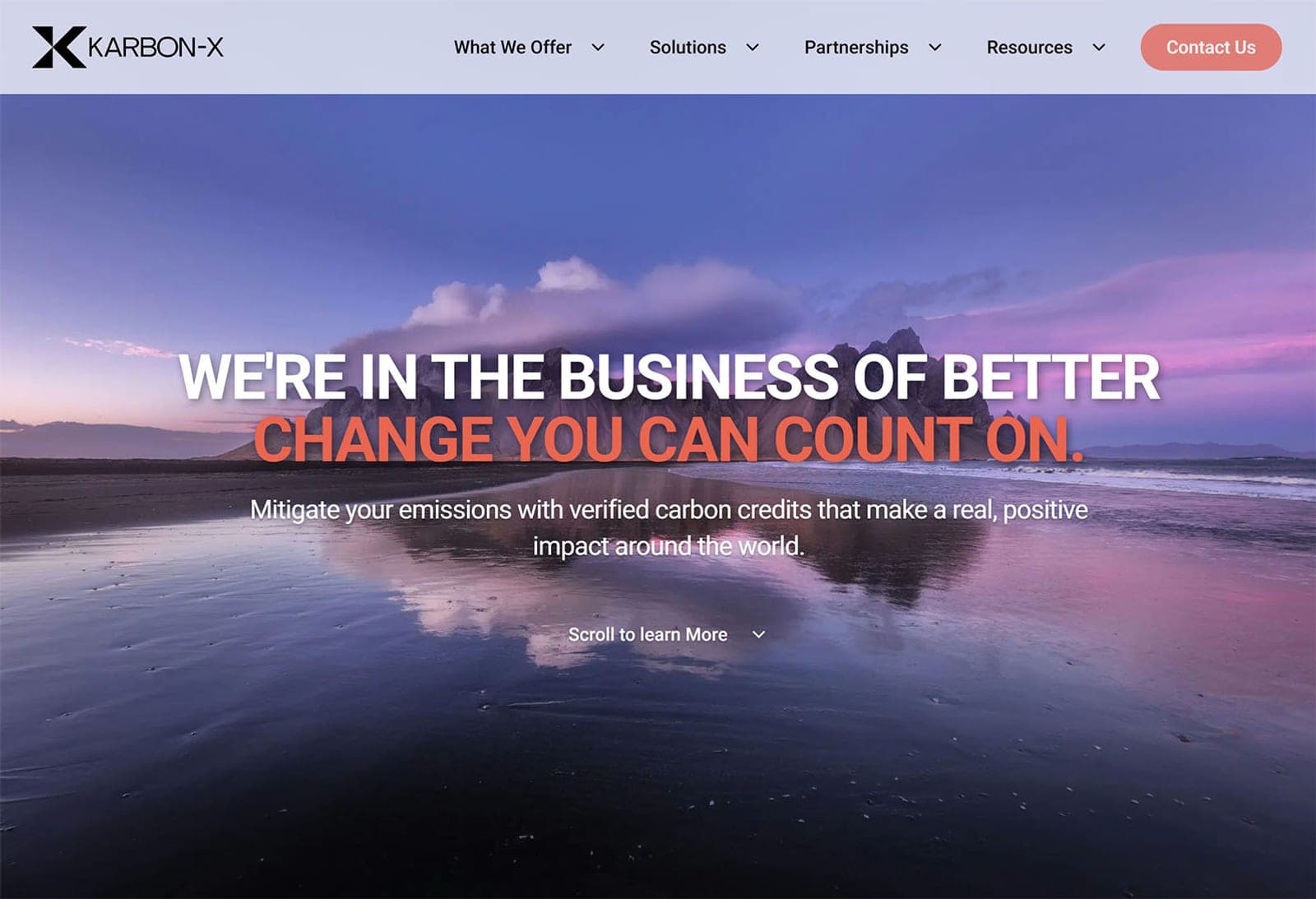
The original homepage, still live. 2026 redesign
The redesigned homepage, on staging.
Quality
Automated tests cover the quiz and the calculator.
- Quiz
- Playwright journeys complete the quiz, check the result, and send it to a mocked email endpoint.
- Calculator
- Unit and component tests cover each step's rules. The B2B case study explains those rules.
Constraints
- The 2026 redesign is not public yet.
- What I'd measure next: quiz completion and plan clicks against the direct pricing path, and Marketing's own account of publishing before and after the admin.
Releasing one audience at a time taught me to treat every live path as a promise. Each release added a new way through the same platform, and the work that mattered most was keeping the calculator, checkout, and articles that already worked steady while the next audience arrived.
Next project
B2B Emissions Calculator
Turning carbon-accounting rules into a multi-step product, across the public site, the portal, and the 2026 redesign.
Have a role or a project in mind?
Email is the direct way to reach me.